

Why Do I Need Dental X-Rays?
by Dr. Labeeb
April 5, 2019
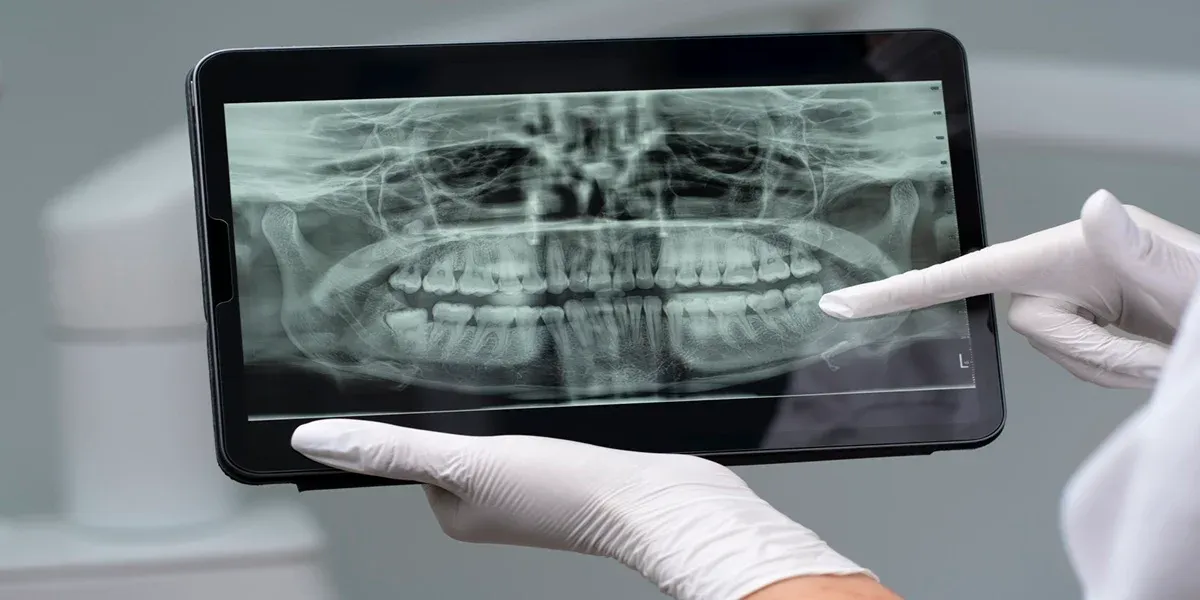
Standard dental exams help ensure your oral health. A dental exam allows your dentist to give tips on minding to your teeth and to distinguish any issues early when they’re generally treatable. Standard dental exams are a critical piece of preventive health care. A dental exam, the dentist or hygienist will clean your teeth and check for depressions and gum sickness.
The dentist or hygienist will likewise assess your danger of creating other oral health issues, like check your face, neck, and mouth for variations from the norm. A dental exam may likewise incorporate dental X-rays (radiographs) or other demonstrative methods.
Also, the dentist or hygienist will probably talk about your eating regimen and oral cleanliness and might show legitimate brushing and flossing strategies. Different subjects for dialog may incorporate a way of life factors that can influence oral health and conceivable corrective enhancements to your teeth.
Amid a dental exam, the dentist or hygienist will:
- Evaluate your general health and oral cleanliness
- Evaluate your danger of tooth rot, root rot, and gum or bone infection
- Evaluate your requirement for tooth reclamation or tooth substitution
- Check your chomp and jaw for issues
- Remove any stains or stores on your teeth
- Demonstrate appropriate cleaning procedures for your teeth or dentures
- Assess your requirement for fluoride
- Take dental X-rays or, if essential, do other indicative methodology
Amid a dental exam, your dentist will likewise get some information about any health issues you have or medications you’re taking and talk about how they may influence your oral health. Due to diabetes, for example, you’re at expanded danger of gum infection. Any medication that adds to dry mouth can build your danger of tooth rot. If joint inflammation meddles with your capacity to viably brush your teeth, your dentist or hygienist may tell you the best way to embed the handle of your toothbrush into an elastic ball for less demanding use or suggest a fuelled or oscillating brush.
If you have prosthetic substitutions, for example, dentures or extensions — your dentist or hygienist will examine how well they fit and talk about the requirement for changes. Dental exams may likewise incorporate directing about eating regimen, utilization of tobacco items and another way of life factors that can influence oral health.
Dental X-ray
X-rays, otherwise called radiographs, are a fundamental piece of any dental consideration treatment plan. They are analytic, however, they can likewise be preventive, by helping a dentist analyse potential oral consideration issues in a patient’s mouth before they turn into a noteworthy issue.
Dental X-rays (radiographs) are pictures of your teeth that your dentist uses to assess your oral health. These X-rays are utilized with low dimensions of radiation to catch pictures of the inside of your teeth and gums. This can assist your dentist with identifying issues, similar to cavities, tooth rot, and affected teeth. Dental X-rays may appear to be complex. However, they’re exceptionally regular apparatuses that are similarly as vital as your teeth cleanings.
TYPES OF DENTAL X-RAYS
A dental X-beam enables the dentist to see itemized pictures of your mouth. Different kinds of dental X-rays are accessible, including:
- Bitewing. This sort of X-beam enables the dentist to see the crowns of the upper and lower teeth. Amid a bitewing X-beam, you’ll chomp down on the X-beam film holder while the X-beam pictures are being taken. Every X-beam demonstrates the upper and lower molars (back teeth) and bicuspids (teeth before the molars). These X-rays are classified “nibble wings” since you clench down on a wing-formed gadget that holds the film set up while the X-beam is taken. These X-rays enable dentists to discover rot between back teeth.
- Periapical. This sort of X-beam enables the dentist to see the whole tooth and the encompassing bone. A periapical X-beam seems to be like a chomp wing X-beam. Be that as it may, it demonstrates the whole length of every tooth, from crown to root. This incorporates each tooth, from crown to attach to supporting structures. They are X-rayed utilizing both bitewing and periapical radiographs.
- Occlusal. This sort of X-ray enables the dentist to see the way the upper teeth and relating lower teeth fit together when the jaw is close. They are bigger than most X-rays. They feature tooth advancement and position in youngsters. Every X-beam indicates the full curve of teeth in either the upper or lower jaw.
- Cephalometric projections are X-rays taken of the whole side of the head. They are utilized to take a gander at the teeth in connection to the jaw and the individual’s profile. Orthodontists use cephalometric projections to decide the best sort of orthodontic treatment.
- Panoramic. This sort of X-beam gives the dentist an expansive perspective of the whole mouth. Panoramic X-rays show the whole mouth on a solitary X-beam. They incorporate all teeth on both upper and lower jaws. This sort of X-beam requires an exceptional machine. The cylinder head that discharges the X-rays hovers behind your head while the film hovers over the front. That way, the full, expansive perspective of the jaws is caught on one film. Since the machine moves in a set way, you must be situated cautiously. Gadgets joined to the X-beam machine hold your head and jaw set up. This may look and feel threatening. However, the procedure is protected. It frequently utilizes less radiation than intraoral X-rays.
- Cone beam modernized tomography. This kind of X-beam gives a 3-D see so the dentist can more readily measure the separating of teeth and contiguous structures. Cone-beam processed tomography (CT) gives three-dimensional pictures. You stand or sit while the machine pivots around your head. The beam is cone-formed, rather than fan-moulded as in a standard therapeutic CT. A cone-beam check utilizes less radiation than a restorative CT examine however unquestionably more than any standard dental X-beam. The cone-beam CT is especially helpful for dental implant determination and situation.
- Standard processed tomography (CT) typically should be done in a radiologist’s office or an emergency clinic. Commonly, you will rest while the picture is taken. The radiation exposure is higher for this sort of CT than for a cone-beam CT. A standard CT sweep might be done to decide the size and position area for implants.
- Digital radiographs are one of the most up to date X-beam methods. Standard X-beam film is supplanted with a level electronic cushion or sensor. The picture goes into a PC, where it tends to be seen on a screen, put away or printed out. Computerized X-rays taken at various occasions can be analysed utilizing a procedure that features contrasts between the pictures. Little changes along these lines can be gotten before. Utilized appropriately, advanced X-rays use about a large portion of the radiation of ordinary film.
X-rays aren’t normally required at each dental visit. Radiation exposure from dental X-rays is drastically low — yet converse with your dentist in case you’re worried about radiation exposure.
HOW X-RAYS ARE USED
X-ray pictures are among the most significant instruments a dentist has for keeping your mouth and teeth healthy. They are additionally called dental radiographs.
For grown-ups, dental X-rays are utilized to:
- Look for regions of rot that the dentist will most likely be unable to see just by looking, for example, rot between teeth
- Look for rot under a filling
- Look for splits or other damage in a filling
- Alert the dentist to conceivable bone misfortune from periodontal (gum) illness
- Show issues in the foundation of a tooth, for example, disease or demise of the nerve
- Help your dentist plan, get ready and spot tooth implants, supports, dentures or other dental work
- Look for different issues.
Share This:
Disclaimer
This media/content or any other on this website does not prescribe, recommend, or prevent any treatment or procedure. Therefore, we highly recommend that you get the advice of a qualified dentist or other medical practitioners regarding your specific dental condition.